Author: Nick Elam

Voltage Cohort 12 is Here!

Innovation Depot is proud to kick off the 12th edition of Voltage, welcoming a new group of participants ready to move their ideas forward. As Innovation Depot’s intensive five-week idea-stage program, Voltage helps founders validate their ideas, build momentum, and begin translating promising concepts into something tangible.

This cohort brings together participants with a wide range of backgrounds, perspectives, and interests. Over the next several weeks, in partnership with Harmony Venture Labs, they’ll spend time learning, testing, refining, and building alongside one another as they take meaningful first steps toward launching tech and tech-enabled ideas. That early-stage energy is exactly what makes Voltage such an important part of Innovation Depot’s founder pipeline.

Meet Voltage Cohort 12

Anthony Dirmeyer
Brandon Cleveland
Brandon Weaver
Chris Townsley
Daleesha Cadore
Esteban Cabassa
Felicia Sodeen
Gaurav Rathi
Gregory Goetcheus
Jenna Farris
Jhana Plump
Jonathan Mitchell
Kerrick Jordan
Laura Lee Stjernstrom
Malika Freeman
Matthew Furnas
Parker Hawkins
Reis Gordon
Taylor Trepagnier
Yesh Logabiraman

We’re excited to see where this cohort goes and proud to support them as they begin the work of turning new ideas into real opportunities. Welcome to Voltage 12.

About Innovation Depot
Innovation Depot is a 501(c)(3) nonprofit tech and entrepreneurial support organization. Housed in a 140,000-square-foot building in downtown Birmingham, The Depot is the largest tech hub in the Southeast and home to programs that guide startups from idea to growth. From flexible coworking spaces to nationally recognized accelerators, Innovation Depot provides the resources founders need to launch and scale their companies.

To learn more about Voltage, visit innovationdepot.org/program/voltage.

Meet Trent Kocurek of Equip: Building Tools That Empower Independence

One of the best parts of spending time at Innovation Depot is getting a front-row seat to the kind of work that quietly changes lives. In this Innovation Depot Founder Story: Equip’s Mission to Empower Independence is a perfect example of how startups can have a meaningful impact. When I sat down with Trent Kocurek, I expected to learn what Equip does at a high level. What I walked away with was something better: a story about noticing a real gap, caring enough to do something about it, and building a product that helps people with support needs gain more independence—one routine, one plan, one small win at a time.


So… what is Equip?

I started with the obvious question: if someone’s never heard of Equip, how do you explain it?

Trent put it simply: Equip is a software platform built for organizations that support individuals who need help with independent living skills and employment skills. These organizations might run transition programs, workforce development programs, or employment services. Equip helps them create person-centered plans, track progress over time, and focus on outcomes—so the people they serve can build more independence and thrive in their communities.


The moment Trent knew this needed to exist

Trent didn’t start in this space. Back in 2021, he was running a different company (a software product development and design firm) and navigating the post-COVID shift to remote work. At the same time, he was feeling the pressure of a talent market where expectations were rising fast—bigger salaries, fewer hours, constant churn.

Then something happened that changed the direction of his career.

One morning, his wife came across a Facebook post about a young man from Trent’s hometown of Cullman, Alabama who had been accepted into the EAGLES Program at Auburn University. She asked him a simple question: “Have you ever heard of the EAGLES program?”

Trent hadn’t. So he clicked the link.

And what he saw put two worlds side-by-side:

  • people with every opportunity who still wanted to do less and demand more
  • and people with the same wants, needs, and dreams as everyone else… who just needed the right support to live and work more independently

That contrast stuck.

He scrolled to the bottom of the page, found the first email address he could, and reached out. That first conversation led to another, and eventually to the early relationships that helped shape Equip. The next year, Trent sold his previous company and went all-in on Equip in September 2023.


Before Equip: binders, spreadsheets, and “hope it doesn’t get lost”

To understand why Equip matters, you have to understand what the process looked like before it existed.

Most of Equip’s customers support individuals with disabilities—often intellectual and developmental disabilities. And Trent kept hearing the same thing from program leaders: the tools weren’t built for their world.

One program leader told him they kept critical information in physical binders—emergency contacts, allergies, medical lists. Schedules lived in shared spreadsheets. Each person had their own tab. Staff would print the tab, take a photo of it, and save it on a phone. If anything changed, they’d delete the photo and repeat the process.

Trent’s reaction was basically: this cannot be real.

But then he talked to other programs… and they were doing the exact same thing.

He also saw a bigger pattern: systems focused on documenting services (“we did the thing”) rather than tracking outcomes (“did it help?”). Add in high turnover and knowledge living in people’s heads, and it’s easy for progress—and important context—to disappear when a staff member leaves.

Equip was created to replace that chaos with something clear, consistent, and actually built for the people doing the work.

Equip Screenshot


What makes it “click” in a demo

When I asked Trent what he shows someone to help them understand Equip fast, he broke it into two parts:

1) A streamlined intake-to-plan flow
Equip takes an individual from referral/intake all the way to a person-centered plan—without the stacks of forms and disconnected steps. The platform helps capture the details that matter (needs, goals, preferences), then turns that into trackable goals and routines that stay with the person.

2) Progress tracking that’s about outcomes, not activity
Equip makes it possible to create tailored assessments that reflect what each individual is working toward. It’s less “we checked a box today,” and more “here’s the progress over time.” Trent also shared how AI is built into Equip to organize information and highlight next steps—so staff can focus their energy on the human interactions that drive real progress.


Equip


The Equip Card: support that goes beyond the four walls

One feature that stood out to me when browsing their site was the Equip Card, and I asked Trent to explain it.

He said a lot of the biggest challenges aren’t happening in a classroom or program setting—they’re happening out in the real world: grocery stores, workplaces, community spaces, and even traffic stops.

Equip is designed to support areas like time management, executive functioning, and emotional regulation—because those are often the difference between someone participating independently and feeling overwhelmed.

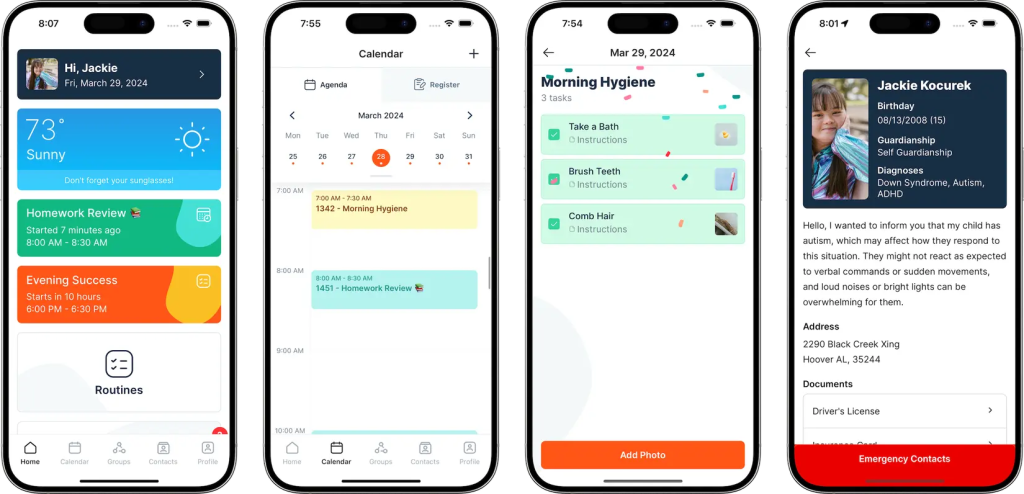
The Equip Card lives inside their mobile app (what they call the “Independence Companion”) and can be pulled up quickly if someone needs help communicating in a stressful moment—like being pulled over.

It shows a photo, basic info, and a customizable message like:
“I have autism. I don’t like loud noises. I don’t like to be touched. I’m not resisting. Please be patient with me.”

It can also include quick access to documents (license, insurance) and an emergency button to contact support people and share location. Trent’s goal with the card is simple: give people a safer, clearer way to communicate when the moment is tense and misunderstandings can happen fast.


A story that stuck with me

To wrap up, I asked Trent for an anonymous before-and-after story—something that shows Equip’s impact in real life.

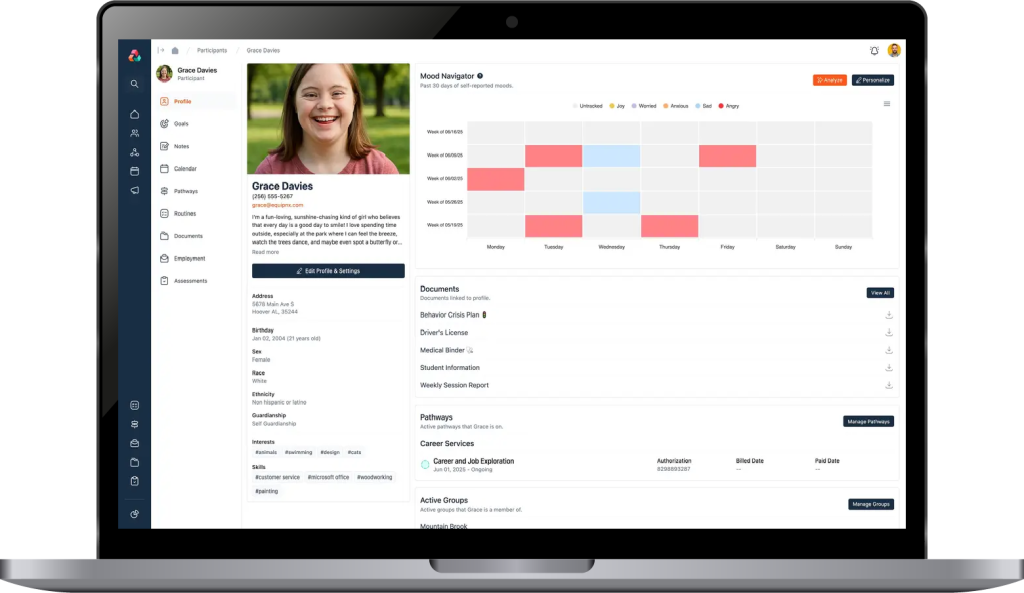
He shared one about a 26-year-old who struggled with routines: hygiene, taking medication, task focus, and emotional regulation. Her family enabled an optional feature called “Mood Navigator,” which lets the person build a personalized coping plan—step-by-step actions like watching a specific YouTube video, listening to a playlist, or calling a parent when they feel overwhelmed.

They also set up routines with prompts and reminders for daily tasks.

The “before” was a lot of stress and constant hands-on support. The “after” was something the family didn’t expect: the grandmother—who had never been comfortable keeping her overnight—finally could. First a night. Then a weekend. Eventually she was asking for more time together.

For the parents, it meant a breath of relief and a chance to step out for a date night.
For the grandmother, it meant more time with her granddaughter.
And for the granddaughter, it meant something even bigger: dignity. Ownership. A sense that “this is mine.”

Trent said it well: sometimes technology feels less like a parent’s instructions, and more like an empowering tool someone can choose to follow.

Who Equip is built for right now


Equip’s best-fit customers are organizations that support individuals through daily, structured services—especially employment and transition programs. Trent mentioned nonprofits and groups like United Ability, Higher Education Programs like the EAGLES, and even state led initiatives to get people back to work

If an organization cares about:

  • reducing administrative chaos
  • tracking real progress (not just documenting tasks)
  • improving outcomes to support funding and accreditation
  • empowering the individual, not just managing the process

…then Equip is built for them.


Innovation Depot helped Equip scale what’s working

Behind a lot of founder success stories, there’s usually a quiet “yes” from the community around them—someone who helped remove friction at the exact right time. For Trent, that support showed up through both The Network and grant funding at Innovation Depot.

As he put it, having those resources “allowed us to experiment more” at a critical stage—surrounded by people who could help Equip learn, position itself well, and build faster.

Through The Network, Trent said Equip was able to get help tightening their website messaging and copy—making it easier for the right customers to quickly understand what Equip does and why it matters. Then, with grant funding, Equip brought in development support to build key functionality—specifically a role-based authentication system—that made the platform ready for bigger, more complex organizations.

That wasn’t just a technical upgrade. Trent shared that this work helped Equip unlock enterprise customers and led to at least $200,000 in new customer revenue—and potentially far more—because they could meet the requirements of larger teams. Without that support, he said, they would have moved slower, hired later, and may have missed opportunities to serve bigger customers that ultimately allow Equip to scale its impact.

When you support the builder, you’re also supporting the real people and families their product touches every day.


Why this matters at Innovation Depot

This is exactly the kind of story we love telling at Innovation Depot. Not because it’s flashy—but because it’s meaningful.

Trent and the team at Equip are building something that makes daily life a little easier for families, support teams, and—most importantly—the individuals working toward more independence.

And the best part? The wins aren’t theoretical. They look like a night at grandma’s house. A calmer moment in the community. A routine that finally clicks. The kind of progress that feels small until you realize it changes everything.


From Golf Course to Game Day: How Wunderfan’s Blake Patterson Is Rewarding the Fans Who Never Miss a Moment

Blake Patterson, co-founder of Wunderfan, wasn’t expecting a celebrity product moment at Super Bowl week.

But in the middle of the chaos—events all over the city, athletes and entertainers everywhere—Blake felt someone lock eyes with him in the crowd.

It was Frank Caliendo, a longtime sports-comedy favorite and impressionist.

A second later, Caliendo stopped him.

“Are you Wunderfan?”

Then he pulled out his phone and showed Blake the app.

“Man, I got your app. I used this last night.”

For a company built around sports fandom, it’s hard to imagine better validation than that: someone with a massive platform not just recognizing the brand, but actively using the product.

And like most “overnight” moments, it took years of building to get there.


The Quick Version: What Is Wunderfan?

Wunderfan is a fan-first loyalty platform that turns sports engagement into rewards.

Fans earn Wunder Coin by watching games, attending events, interacting with content, making picks, and purchasing tickets—then use those rewards inside the app, including toward future tickets.

The goal is to make fandom more rewarding while helping teams and brands drive deeper, longer-lasting engagement.

Wunderfan


The “This Could Be Real” Moment

Before Wunderfan, the team built a sister app called Wunderpar, originally as a “hobby.” Early on, Blake had a formative trip to Las Vegas where he met the founder of CBS SportsLine (later CBSSports.com). He created a video concept—Michael Jordan vs. Tom Brady: who’s the GOAT?—and it performed exceptionally well.

That’s when the feedback landed:

Sports wasn’t just an audience. It was their audience.

Instead of building a tech product and hoping it finds a home, the direction became clearer: build for the category that already has obsession baked in.


Wunderfan grew out of an earlier concept called Wunderpar, a golf-based rewards app where users earned points simply for playing.

The team layered in drops, competition, and real-time leaderboards, and when brands like Callaway showed interest, it confirmed they were onto something.

But golf is still niche—so they took the same “reward fans for what they already do” model and expanded it into a much larger arena: mainstream sports.

Inspired by the challenge teams face not just filling stadiums but keeping fans engaged, the idea evolved into Wunderfan—built for football and beyond.


Super Bowl Week: “Beyond Surreal”

Wunderfan was invited to Super Bowl week through connections tied to the NFL and a major podcast, and the experience put the company directly in front of the sports world’s biggest names.

Blake describes it as surreal: meeting and talking with A-listers, having real conversations instead of quick drive-by interactions.

But the Caliendo moment still stands out because it wasn’t networking—it was proof of usage.

People weren’t just saying, “cool idea.” They were saying, “I’m already in it.”


The Next Six Months: Growth Mode

Blake says the company is pushing toward being an “enterprise” app, improving the experience with more gamification and a homepage built for stronger retention.

Up until now, much of the growth has been organic. The next phase looks different:

  • Paid advertising

  • Partnerships

  • Scaling with dedicated teams

  • Preparing for a Series A


The New “Aha”: Tickets Without Fees

Right now, the biggest momentum driver is Wunderfan’s ticket marketplace—an international inventory built into the app.

Blake says they have $200M worth of tickets available at any given time, covering sports, concerts, and other live events. The marketplace is location-aware, so it shows relevant events whether you’re in Birmingham or abroad.

The fan benefit is obvious:

  • Apply Wunder Coin to lower the ticket cost

  • Earn rewards even if you don’t have Coin yet

  • Avoid the fee shock that hits on the secondary market

Blake says the ticket side is already nearing $10,000 per day in revenue and has captured attention from colleges and pro teams—because their job is simple: get people in seats, then deliver a great experience.

Wunderfan helps with the first part and improves the second by making fans feel rewarded for showing up.


Building in Birmingham, Growing Everywhere

Wunderfan may be building for a global sports audience, but it’s rooted in Birmingham—and Blake says Innovation Depot has been a big part of that. “My thesis is team, team, team,” he told us. “And here at Innovation Depot, it really feels like we’re a part of a team.” For a founder, that daily support matters: people around you knowing what you’re building, encouraging it, and helping keep momentum moving.

Blake also points to the advantage of the Innovation Depot name itself—especially with leaders like Brooke and Ritchie, and the track record of wins that have come out of the building. In a city he describes as having strong private capital and a growing “yes” mentality, he believes Birmingham can be “Austin 2.0”—a place where founders prove you can build something worldwide from anywhere. For Wunderfan, that global organization is being built right here.

Innovation Depot launches Boost Cohort 4

BIRMINGHAM, Ala. (October 15, 2025) – Building on the momentum of its earlier cohorts, Innovation Depot is excited to launch Boost Cohort 4; a hands-on program helping early-stage founders sharpen their Minimum Viable Products (MVPs), engage real customers, and move toward repeatable traction.

Boost fills a crucial gap in Birmingham’s startup pipeline by serving founders who’ve validated a tech idea and are ready to win their first customers and build the foundations of growth.

What founders get in Boost

  • Early-growth focus: Go from prototype to product with a clear path to first customers and early traction.
  • Customer-centric playbooks: Practical work on discovery, positioning, pricing, and go-to-market; rooted in real feedback.
  • Expert guidance: Access to Innovation Depot mentors, operators, and industry leaders for tactical support.
  • Real-world reps: Interactive workshops and weekly checkpoints to test assumptions, iterate quickly, and build momentum.

“This stage, getting from MVP to ‘someone paid for it’, is where focused support matters most,” said Ritchie Kruunenberg, VP of Strategy & Startup Growth at Innovation Depot. “Boost gives founders the tools, accountability, and community to turn signals into traction.”

Meet Boost Cohort 4

Innovation Depot is proud to welcome the founders selected for Boost Cohort 4:

  • Anthony King & Roderick Jordan
  • Braden Crow & Drake Willhite
  • Brihanna Brown
  • Eisa Shunarra
  • Jason Owens
  • Matthew McCarter
  • Merrill Flowers
  • Miles Underwood
  • Olivia Harris

These founders span a range of industries, united by a shared goal: transforming early prototypes into customer-ready products with measurable traction.

Innovation Depot remains committed to nurturing Birmingham’s tech talent and creating an environment where startups thrive through mentorship, community, and founder-focused programming.

About Innovation Depot

Innovation Depot is a 501(c)(3) nonprofit tech and entrepreneurial support organization headquartered in a 140,000-square-foot campus in downtown Birmingham. The Depot provides programs, mentorship, and workspace for founders at every stage. Learn more at innovationdepot.org.

Voltage 11 is here!

FOR IMMEDIATE RELEASE

Birmingham, Ala. (September 2025) – Innovation Depot is proud to announce the launch of the eleventh iteration of its Voltage program, welcoming a new cohort of 25 entrepreneurs working on 21 bold, tech-driven ideas. Since its inception in 2021, Voltage has empowered more than 200 aspiring founders to test, refine, and validate their business concepts—cementing its place as a cornerstone program for early-stage innovation in the Birmingham area.

The five-week program is uniquely designed for founders who are balancing busy lives, offering flexible evening and weekend sessions and access to vital resources. Participants will receive practical tools and a supportive community to transform raw ideas into tested, market-ready concepts—all outside of the traditional 9-to-5 schedule.

This cohort represents the continued growth and momentum of Voltage. With consistent demand, the program demonstrates just how vital structured support is for first-time founders and innovators across Alabama.

Ritchie Kruunenberg, VP of Strategy & Startup Growth at Innovation Depot, emphasized the significance of this milestone:

“Every Voltage cohort is a reflection of Birmingham’s expanding entrepreneurial energy. These participants bring diverse perspectives and are united by a drive to solve real problems through innovation. We’ve now supported over 200 entrepreneurs through Voltage, and each group continues to raise the bar. This eleventh cohort will no doubt push the boundaries of what’s possible.”

Brooke Gillis, CEO of Innovation Depot, highlighted the impact of Voltage on Birmingham’s startup ecosystem:

“The growth of Voltage is proof that early-stage founders need accessible, high-quality programming. We’re watching participants turn ideas into businesses, many of which continue on into our incubation programs here at Innovation Depot. This program is fueling the next generation of startups.”

As in previous years, AppThink, powered by HVL, will provide hands-on training and mentorship, helping participants make informed decisions as they shape their ventures. The program kicked off with a high-energy networking event designed to connect founders and set the tone for five weeks of rapid progress.

Welcome to Voltage Cohort 11:

  • Adil Patel

  • Alex Bimes

  • Anna Lynn Harms

  • Ash Perry

  • Autumn Sanders

  • Balagee Govindan

  • Bradford Caddell

  • Chuck Self

  • Curtis Renninger

  • Darrick Long

  • Devin James Holcomb

  • Ivy Rice

  • Jesus (Alex) Martinez

  • Mallory Sublette

  • Mike Hancock

  • Myles Chandler

  • Patrick McKinney

  • Patrick Rixey

  • Scarlotte Kilgore

  • Talib Tayyab Mohammed

  • Tara Renninger

  • Taylor McKinney

  • Teria Alexandria Agee

  • Teyseer “Ty” Missoum

  • Tierra Virden

About Innovation Depot
Innovation Depot is a 501(c)(3) nonprofit tech and entrepreneurial support organization. Housed in a 140,000-square-foot building in downtown Birmingham, The Depot is the largest tech hub in the Southeast and home to programs that guide startups from idea to growth. From flexible coworking spaces to nationally recognized accelerators, Innovation Depot provides the resources founders need to launch and scale their companies.

To learn more about Voltage, visit innovationdepot.org/program/voltage.
Meet the Founders Behind Prismm: Building the Vault for Generational Wealth

At Innovation Depot, we believe some of the best startups are born from deeply personal experiences, and the story behind Prismm is no exception.

In this episode of Mile-A-Minute, we walk and talk with sisters Martha Underwood and Shella Sylla, the powerhouse duo behind Prismm, a digital vault designed to simplify one of life’s most complex moments: transferring wealth and information after a loved one passes.

It all started with a scare. When their father fell off a roof during Hurricane Irma and was rushed to the hospital, their mother was left scrambling for critical documents; health directives, insurance details, and more. That moment revealed a massive gap in how families manage and access end-of-life information. Prismm was built to close that gap.

Today, Prismm is changing the game for banks, financial institutions, and wealth advisors by providing a secure, accessible platform to store and transfer essential documents. As Martha says in the interview, “Love for my parents inspired this—and I never want anyone else to feel that helpless in an emergency.”

The best part? This is a true family business. Martha and Shella aren’t just co-founders; they’re sisters. “I get to tell her like it is,” Martha laughs, “and she can’t do anything about it because she’s stuck with me.”

Their mission is simple but powerful: make hard conversations easier and help families plan for the future with confidence.

💬 “Prismm is the vault built for the next generation, powered by the wealth of the last generation.”

Watch the full conversation below to hear more about their story, meet their CTO Chris, and get a behind-the-scenes look at how Prismm is building the future of digital legacy.


Enjoy this video? Be sure to check out our recent chat with Thomas Coiner of SportsFeed too!

Innovation Depot Launches Third Boost Cohort, Supporting Startups in Transition from MVP to Market

BIRMINGHAM, Ala. – Following the success of its previous cohorts, Innovation Depot is proud to announce the launch of Boost Cohort 3, a hands-on program designed to help early-stage founders sharpen their Minimum Viable Products (MVPs), engage with real customers, and move closer to market readiness.

Boost fills a crucial gap in Birmingham’s startup support pipeline by providing tailored resources for founders who have validated their tech ideas and are ready to begin serious customer acquisition and business development.


Key Features of Boost:

Focused on Early Growth: Boost serves founders who are preparing to go from prototype to product, with the goal of securing their first customers and early traction.

Customer-Centric Curriculum: The program emphasizes customer discovery, iterative product development, and go-to-market strategies rooted in real feedback and industry-tested frameworks.

Expert Guidance: Participants gain access to Innovation Depot’s expansive network of mentors, entrepreneurs, and industry leaders who offer practical insight and support.

Real-World Application: Boost is structured around interactive, results-driven workshops, giving founders the opportunity to test assumptions, build momentum, and refine their go-to-market approach.


“We’re excited to welcome this next group of founders to Boost and help them navigate one of the most critical phases of building a startup,” said Ritchie Kruunenberg, VP of Strategy & Startup Growth at Innovation Depot. “Our goal is to equip founders with the tools, knowledge, and connections they need to confidently take their MVPs into the market and begin growing sustainable businesses.”

Trevor Newberry, Co-Founder of AppThink and Director of Product at Harmony Venture Labs, also expressed his enthusiasm: “With Boost, we’re addressing a crucial gap in entrepreneurial training—securing that all-important first customer. The program is designed to not only guide founders through the process of product development but also to help them learn, iterate, and ultimately sell their products. We’re eager to see the positive impact this cohort will have on the Birmingham startup ecosystem.”


Meet the Boost Cohort 3

Innovation Depot is proud to introduce the eight promising founders selected for Boost Cohort 3:

  • Ethan Hendrix, FICOM Technologies, LLC

  • Jeff Brown

  • Joshua Gilmer, Luau

  • Katie Marietta-Tondin, Lit Up

  • Keith Saffold

  • Miho Kubagawa, Launch Loop

  • Paula Guevara, Bilinci

  • Sanjay Kumar

These founders represent a diverse range of ideas and industries, united by a shared goal: transforming early-stage prototypes into viable, customer-ready products.

Innovation Depot remains committed to nurturing Birmingham’s tech talent and creating an environment where startups can thrive through collaboration, mentorship, and strategic support.


About Innovation Depot:

Innovation Depot is a 501(c)(3) nonprofit tech and entrepreneurial support organization headquartered in a 140,000-square-foot campus in downtown Birmingham. The Depot provides a range of founder-focused programs, mentorship opportunities, and incubation space for startups at every stage. To learn more, visit innovationdepot.org.

From Fans to Founders: How Sport Feeds Pivoted from B2C to B2B

Building a successful startup often requires adaptability, resilience, and a clear vision — and Sport Feeds is a prime example of that journey. We recently caught up with Thomas Coiner, CEO and co-founder of Sport Feeds, to hear about their transition from a direct-to-consumer (B2C) sports platform to a business-to-business (B2B) data service. Their story is a testament to the power of persistence and the importance of recognizing when it’s time to pivot.

Building a Product for Fans

Originally launched as Backer, Sport Feeds started as a platform where sports fans could follow their favorite athletes. The product gained traction and engagement, but the revenue didn’t justify the operational costs. Realizing the need for a shift, the team began exploring how their technology could serve businesses instead of consumers.

“We looked at the technology we built along the way, noticed it was highly valuable for other businesses, and started to sell that product.”


Facing the Challenges of Pivoting

Transitioning from B2C to B2B came with its own challenges — especially the lengthier sales cycle. While it once took only seconds to convince fans to sign up, selling to businesses required a much longer commitment.

“I wish I would have known how much longer the sales cycle is on the B2B side than it was with a simple fan.”


During the transition, the team even ran out of funds. Determined not to give up, they took on other jobs to self-fund the shift to B2B.

“We had like $2 in our bank account. We decided to go all in at a conference in our industry, pitching our new product to over a dozen potential customers. Not a single one said no. They just asked, ‘How much is it?’”


Finding Success in the Pivot

That conference moment was a turning point. The interest from potential customers confirmed that their new B2B product had genuine market demand. From there, the team leaned into commercializing their product, backed by the encouragement of investors and team members who believed in the vision.

“We really saw through the path to profitability. It’s just been the funnest ride I’ve ever been a part of.”


Looking Ahead

Today, Sport Feeds has a clear focus: expanding their product, growing their sales pipeline, and continuing to build in Birmingham. Their subscription-based model allows businesses to easily integrate with their data platform, and the future looks bright.

“Now it’s just become so much more clear — turning our ideas into execution, into revenue. It’s going to be a great year, and we’re really excited to keep building.”

Sport Feeds’ journey is a reminder that sometimes, the best opportunities come from the toughest challenges — and that no successful pivot happens without a little grit.

🚀 Voltage Cohort 10 is Here! 🚀

Innovation Depot is proud to kick off the 10th edition of Voltage, welcoming an incredible group of entrepreneurs ready to turn their tech ideas into reality! With a diverse mix of backgrounds and industries, this cohort has 33 founders & 26 ideas—proof that the demand for early-stage startup support keeps growing.  

Since launching in 2021, Voltage has empowered over 165 entrepreneurs to refine and validate their concepts before jumping headfirst into building. The five-week program is designed with flexibility in mind, helping founders move forward without disrupting their 9-to-5. With expert mentorship from AppThink (powered by HVL) and a supportive community of peers, each participant will gain the clarity, confidence, and connections needed to take their next steps.  

Innovation Depot CEO Brooke Gillis highlighted Voltage’s growing impact:  

 “Each year, Voltage attracts more ambitious founders looking to validate their ideas, and we’re seeing real success stories emerge from the program. Birmingham’s startup ecosystem is growing, and programs like Voltage are helping fuel that momentum. We’re excited to support this next wave of innovators.”


VP of Strategy & Startup Growth Ritchie Kruunenberg
added:  

“Voltage continues to prove that early-stage founders need a space to test their ideas before making big commitments. With every cohort, we see more participation, stronger ideas, and founders who are ready to put in the work. This group is bringing serious energy, and we can’t wait to see what they accomplish.”


Last week, we kicked things off with a high-energy launch event at Monday Night Brewing, where participants got to connect and set the stage for the journey ahead.  

🎉 A huge welcome to our Cohort 10 founders! 🎉

Peggy Pursell

Justin McCleskey

Justin Hill

Aliyah & Shaliyah Johnson

Naila Jackson

Khiry Jennings

Laura Elliott

Faaiz Saad & Omar Hamki

Merrill Flowers

Chakravarthy Petluri

Ahmad Elgazzar

Laura Way

Eugene Rogers

Amitkumar Mehta & Dharmesh Vora

Miles Underwood

Gabrielle Hunter

Nicholas Hershy

Karthik Gaur, Brandon Woodworth & Mason Wolf

Marvin Hamilton & Utkarsh Kumaran

Apurva Chinta

Will McCollum

Akazha Green

Roderick Jordan & Anthony King

Michael Disko


Stay tuned as they take their ideas through the Voltage process—we can’t wait to share their progress!  

#VoltageAtID #StartupJourney #BirminghamTech #FounderLife #InnovationDepot #TechStartups